
Battery energy storage · Australia & beyond
Energy storage.
At your scale.
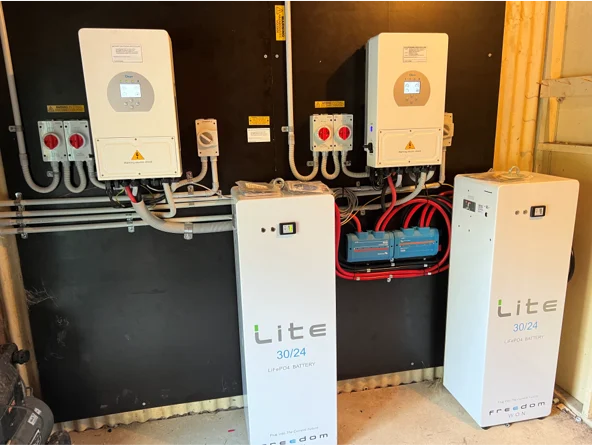
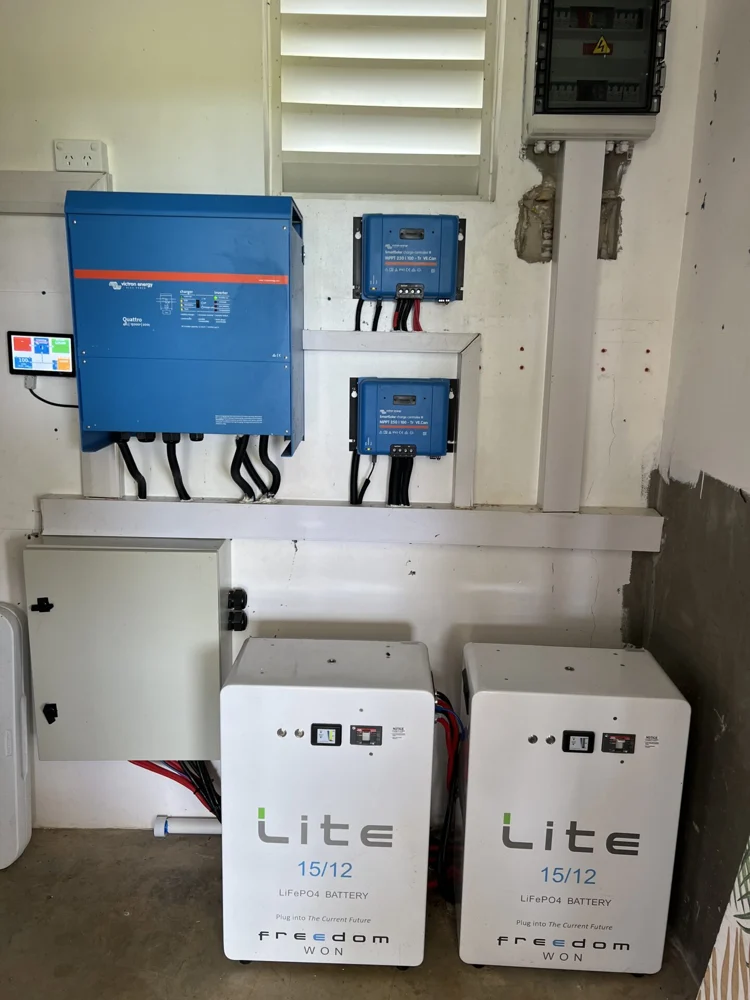
Freedom Won Australia supplies lithium iron phosphate (LiFePO₄) battery energy storage for homes, businesses, industrial sites and vessels across Australia, New Zealand and the Pacific Islands.
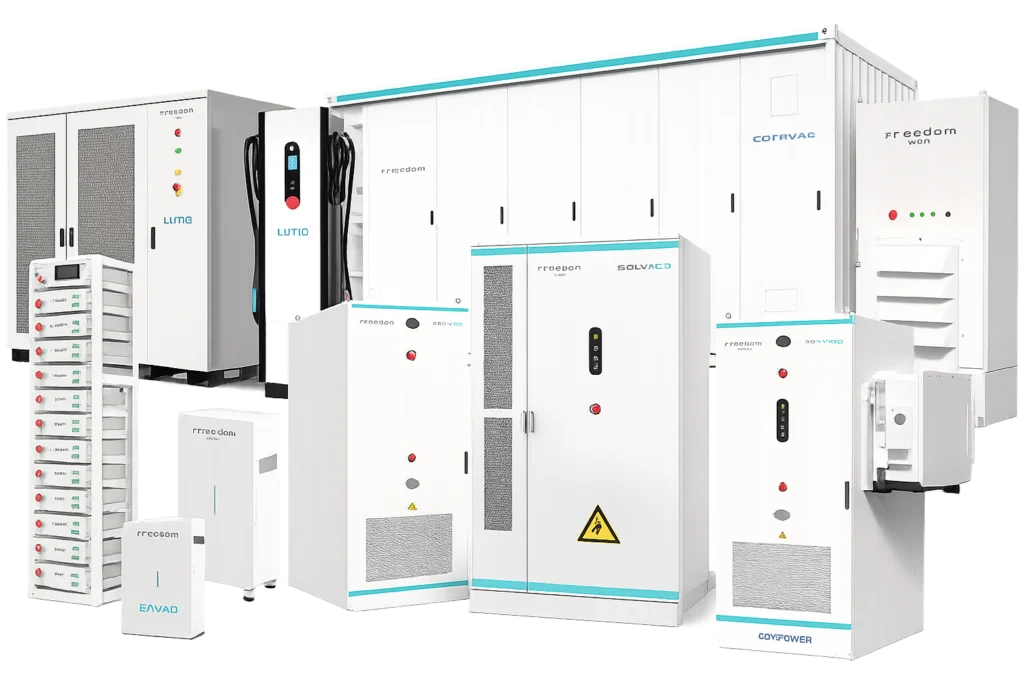 Residential → Commercial → Industrial
Established in Australia in 2019Local distribution and technical support
LiFePO₄ battery technologyResidential through to industrial applications
Products + integrationBatteries, inverter guidance and system resources
The Freedom Won range
Find the right scale
for your energy needs.
Compare product families, explore technical documentation and discuss the right configuration for your application.
Which battery family fits your application?
A battery energy storage system stores electricity for later use. Its energy capacity, expressed in kilowatt-hours (kWh), describes an amount of energy; its power rating, expressed in kilowatts (kW), describes the rate of delivery. For example, a constant 2 kW load uses 10 kWh over five hours, before conversion losses and reserve requirements. Source: Australian Government energy glossary.
| Application | Family / model | Energy | Other reference point | Integration | Source |
|---|---|---|---|---|---|
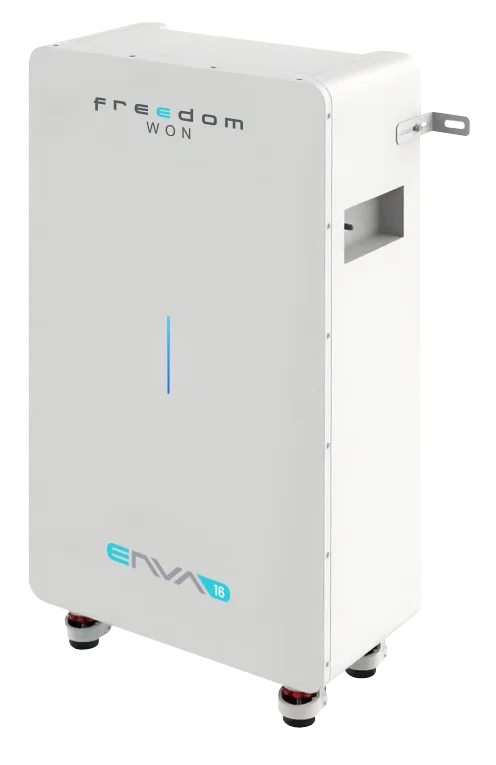
| Home and business | ENVA 5 / ENVA 16 | 5.12 / 16 kWh total | 4.1 / 12.8 kWh at 80% DoD | External compatible inverter | ENVA 5 source guide · ENVA 16 source guide |
| HV commercial | ENVA 60HV standard 12-module configuration | 61.44 kWh rated | 614.4 V nominal | Exact HV inverter matching | ENVA HV source guide |
| Commercial | SOLVA six-model range | 208.8–418 kWh total | AC / DC / RT configurations | Integrated PCS, external inverter or rectifier arrangement | SOLVA technical brochure |
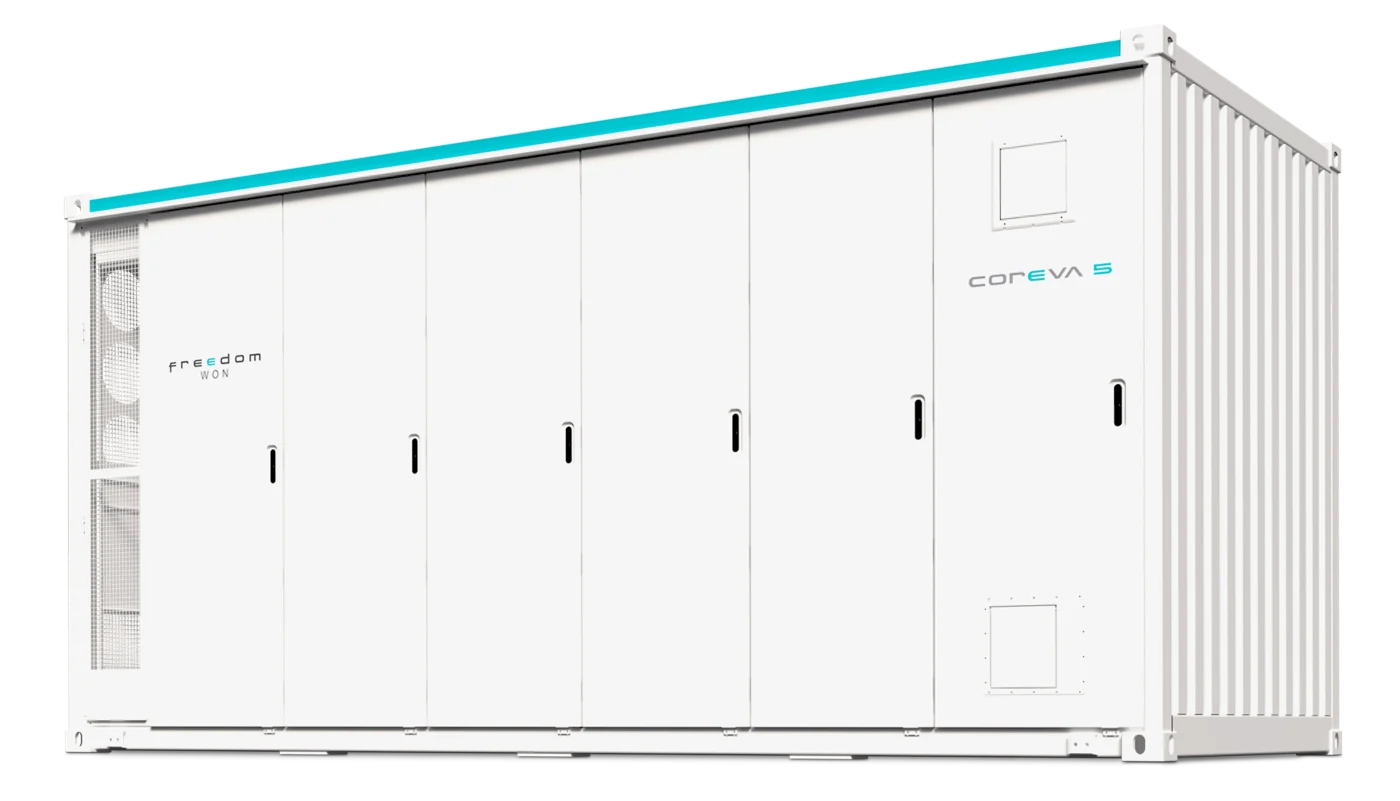
| Industrial | COREVA 5 | 5,015 kWh listed | 2,508 kW maximum output listed | Project-specific conversion and connection design | COREVA 5 guide |
| Marine | IP66 marine range | 10/8, 16/13 and 30 kWh model designations | 51.2 V or 96 V nominal | Vessel-specific charger and inverter checks | Marine manufacturer flyer |
Examples describe particular configurations, not universal family limits. Footprint, usable energy, continuous output and warranty conditions must come from the exact model sheet. Open the full document library.
Choose a model · Check the details
The specification
for your selection.
Choose a model to compare its capacity, power ratings and configuration.
SOLVA
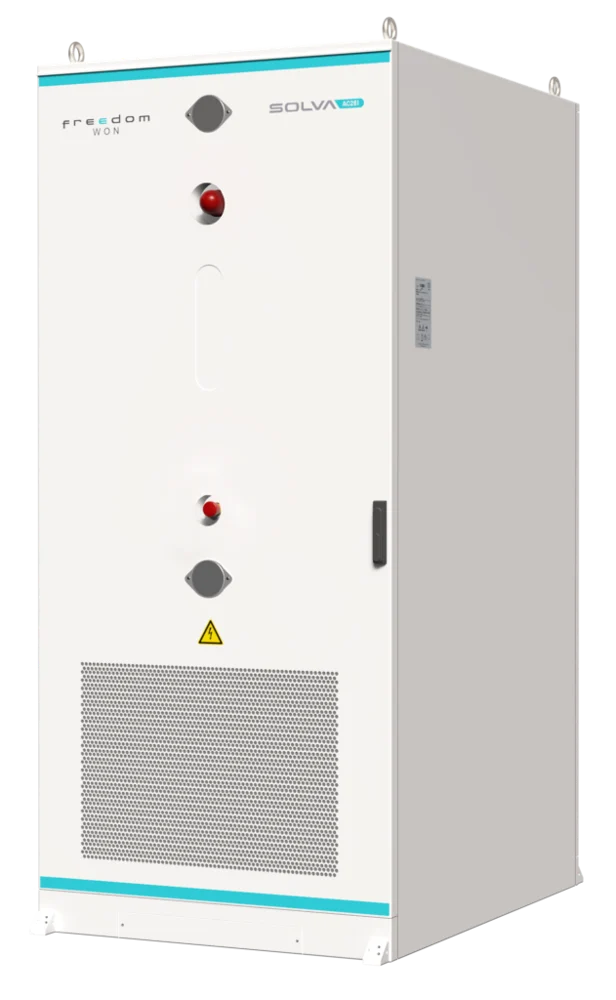
SOLVA AC261
AC-coupled storage with an integrated power conversion system and 400V AC output.
- Total energy capacity
- 261kWh
- Integrated PCS
- 125kW
- Battery chemistry
- LiFePO₄
- Enclosure rating
- IP55
Confirm the model, configuration and current specifications with your proposal before ordering.
Compare all six SOLVA models
| Model | Total energy | Power component | System arrangement | Source |
|---|---|---|---|---|
| SOLVA AC261 | 261 kWh | 125 kW integrated pcs | AC-coupled storage with an integrated power conversion system and 400V AC output. | Undated brochure, page 6 |
| SOLVA DC208 | 208.8 kWh | 100 kW dc busbar rating | DC-coupled storage for an external inverter. The 100kW value is the DC busbar rating, not an included inverter output. | Undated brochure, page 10 |
| SOLVA DC261 | 261 kWh | 125 kW dc busbar rating | DC-coupled storage for an external hybrid or central inverter. The external inverter is separate. | Undated brochure, page 11 |
| SOLVA RT261 | 261 kWh | 125 kW integrated rectifier | Dual-conversion configuration with an integrated rectifier for DC bus charging and external inverter integration. | Undated brochure, page 14 |
| SOLVA AC418 | 418 kWh | 215 kW integrated pcs | AC-coupled storage with an integrated PCS and 690V AC output, for projects designed around the required transformer interface. | Undated brochure, page 16 |
| SOLVA DC418 | 418 kWh | 210 kW dc busbar rating | High-voltage DC-coupled storage for an external central inverter. The 210kW value is the DC busbar rating. | Undated brochure, page 18 |
Total battery energy is not usable AC energy. A DC busbar or rectifier rating is not an included AC inverter output. AC261 uses 400 V AC; AC418 uses 690 V AC. Match the transformer and connection design to the selected model.
Start with your application
Where do you
need energy storage?
Bring together the battery, inverter and controls around the way your site uses energy.
Why consider Freedom Won for your project?
Since 2019, Freedom Won Australia has supplied battery storage for projects across Australia, New Zealand and the Pacific Islands. Our range spans homes, businesses, industrial sites and vessels, with technical support to help match the battery to the application. Work with our reseller and solution-provider network to take your project from product selection to an installation proposal.
| Approach | When it may fit | What to compare with a Freedom Won proposal |
|---|---|---|
| Solar without a battery | Most consumption occurs during solar production and stored-energy backup is not required. | Evening electricity purchases, export value and which loads need outage support. |
| Integrated AC battery system | A project calls for a packaged power-conversion arrangement. | SOLVA AC261/AC418: total and usable energy, continuous output, AC voltage and transformer scope. |
| Battery with a separate inverter | An existing or project-specific inverter architecture needs to be retained. | Freedom Won DC options: exact supported combination, communications, protection and responsibility for commissioning. |
| Generator-led backup | Stored energy alone cannot meet the required duration or recharge conditions. | Fuel, maintenance, transfer arrangements and how solar plus batteries may reduce generator operation. |
Compare competing proposals using the same load profile, usable energy, continuous power, warranty conditions, expansion scope and installed cost. The appropriate choice depends on the site; these comparisons do not claim that one brand is universally cheaper or better.
ENVA 16 and Tesla Powerwall 3: compare the system architecture
For home and business projects, compare the complete battery-and-inverter design. ENVA 16 allows a separately selected, supported inverter; Powerwall 3 packages solar conversion and battery storage together. That distinction matters when retaining existing equipment or planning a new installation.
| Decision point | Freedom Won ENVA 16 | Tesla Powerwall 3 |
|---|---|---|
| Energy basis | 16 kWh total; 12.8 kWh at 80% depth of discharge. | 13.5 kWh usable AC energy under the datasheet test conditions. |
| Conversion equipment | Separate compatible inverter, selected for the required loads and operating mode. | Integrated solar-and-battery system; output configuration and local connection limits apply. |
| Warranty overview | Five-year / 6,000-cycle warranty headline; confirm the applicable Australian terms and conditions. | Ten-year warranty; consult Tesla’s applicable Australian terms. |
| Primary source | Freedom Won ENVA specifications | Tesla Australia Powerwall 3 datasheet, 2025 edition |
These energy figures use different measurement boundaries and operating assumptions. They do not prove that one system delivers more usable energy to your appliances. Ask for a comparison at the same load, reserve, temperature and conversion assumptions. Explore the ENVA 16 planning guide or request an FWA proposal.
Projects in focus
See the systems.
Understand the application.
Project snapshots
The scale behind the story.
LCM Store · Santo, Vanuatu
Battery storage
Hybrid inverter capacity
Provision for future storage
Project capacity and equipment ratings.
Read the case study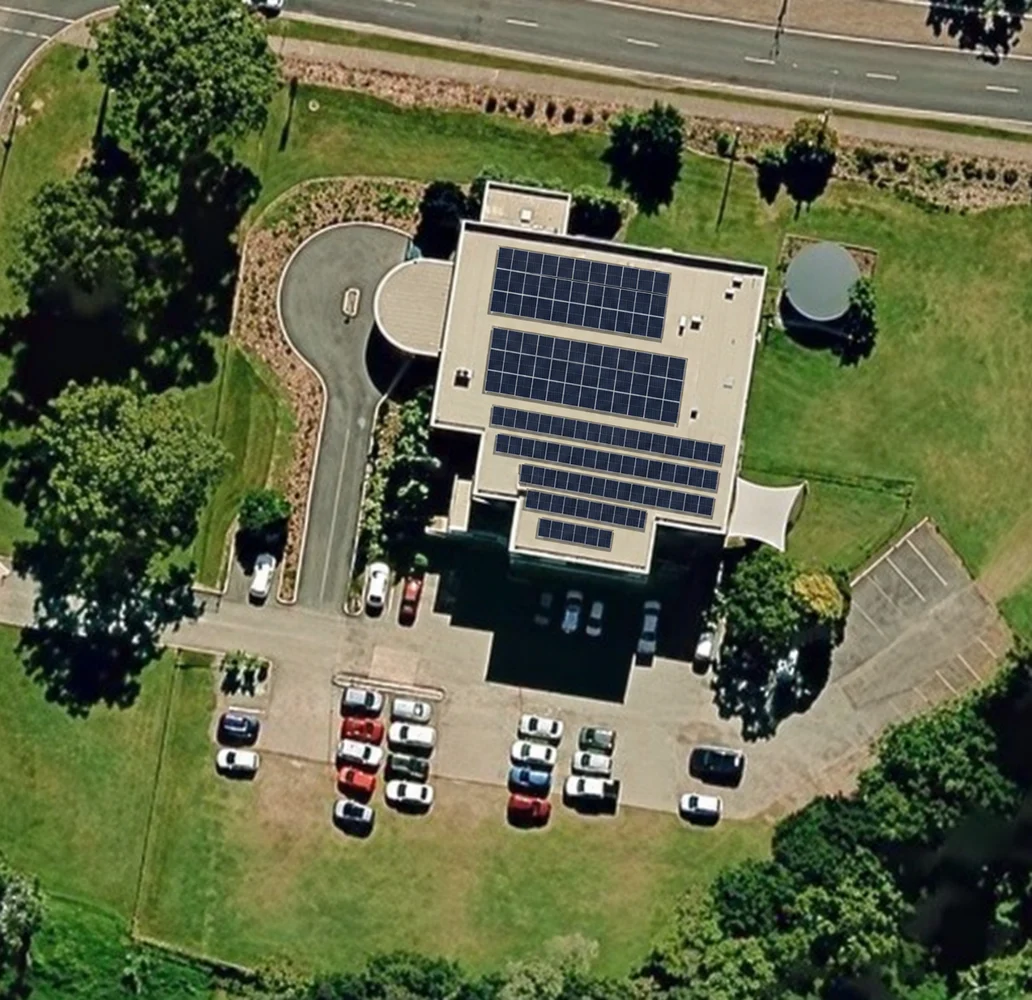
Storage at work
LCM Store, Santo: renewable-first supply with expansion provision
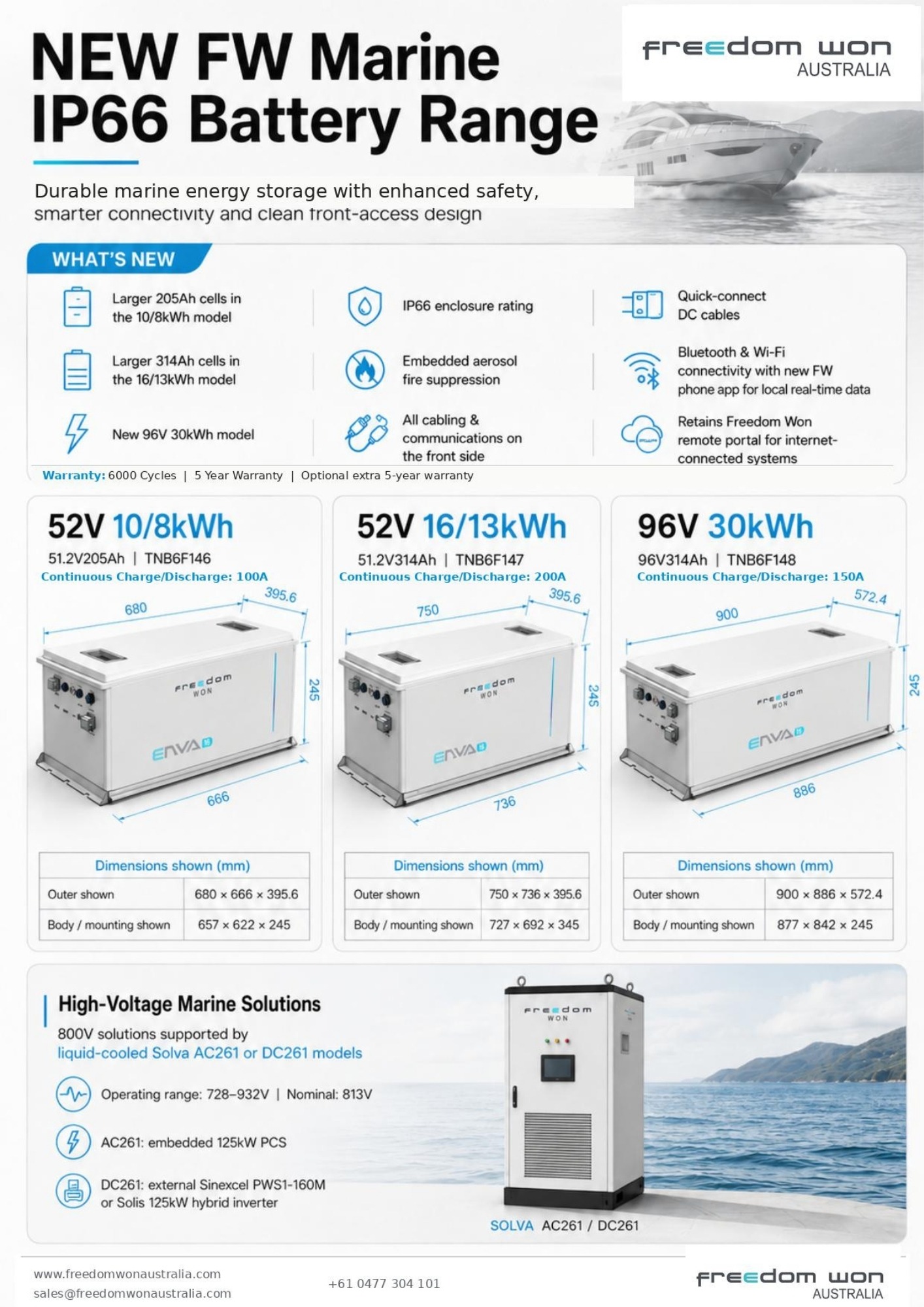
LCM Store’s 12m Power Room combines 885kWh of megaTower storage with 150kW of hybrid inverter capacity. Solar supplies daytime demand and charges the batteries for later use, with generator backup when renewable energy is insufficient. The design also allows for future expansion to approximately 1.77MWh. LCM Store case study.
Unity Hub, Slacks Creek: daytime generation for evening activity
Unity Hub combines 60kW of solar, 180kWh of storage and 60kW of inverter capacity to support a community venue with evening events. Storing daytime solar makes that energy available when activities continue after sunset. Unity Hub case study.
Each installation is designed around its own load profile, charging opportunities and operating priorities. Explore how these choices come together across our projects. Explore the project library.
Integrated solution technologies
Built around the
right integration.
Explore how inverter and control technologies fit different battery applications.
Explore inverter compatibility




















Compatibility depends on the exact battery and inverter models, firmware and system configuration. Confirm the proposed combination with Freedom Won Australia before ordering.
For installers & project teams
The details behind
the right system.
Find product documentation, check inverter integration and get help from the technical team.
How to access regional support
- Product and supply: email sales@freedomwonaustralia.com with the location, battery model and project brief.
- Design and installation: use the reseller and solution-partner directory to identify an appropriate regional contact.
- Technical documentation: use the download centre for datasheets, manuals, warranties and interface guides.
- Existing installation: start with the responsible installer and provide the model, serial number and fault information when seeking support.
Freedom Won Australia
Local knowledge.
A direct connection to the manufacturer.
Established in 2019, Freedom Won Australia imports and distributes Freedom Won batteries across Australia, New Zealand and the Pacific Islands. The batteries are manufactured in South Africa, with local distribution and technical support for the regions we serve.
Read our storyThe people behind your enquiry
Freedom Won Australia is owned by Hennie and serves the region through its Brisbane-based team and listed supply partners. Meet the FWA team and understand the support pathway.
Energy insights
Know your options.
Plan your next step.
Planning & guides
Choosing commercial battery storage for your business
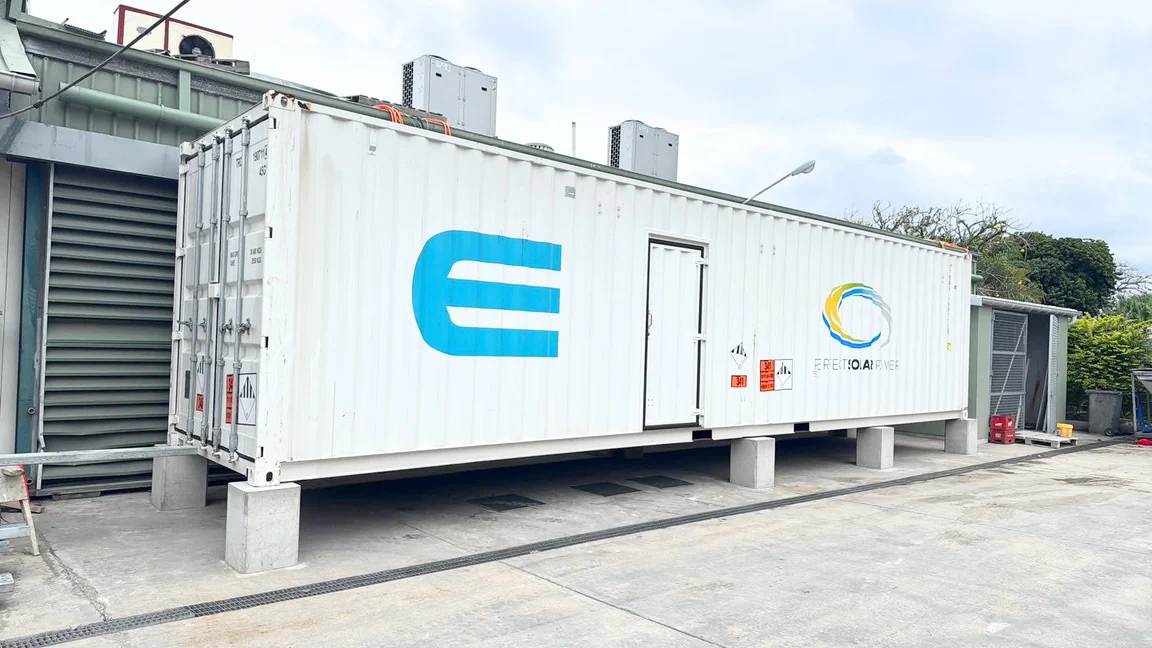
Start with your site’s electricity use, tariff and operating priorities. Compare battery capacity, inverter power and integration requirements together, then ask for a proposal based on your actual load profile.
Read the guide Freedom Won AustraliaCommercial storage
SOLVA AC, DC and RT battery systems explained
SOLVA model names identify the configuration and capacity class. AC models include a power conversion system, DC models use external inverter integration, and RT261 uses a dual-conversion arrangement. Match the exact model to the proposed system design.
Read the guide Freedom Won Australia52V · 10/8kWh
52V · 16/13kWh
96V · 30kWh
Marine
Comparing the new Freedom Won marine battery range
The updated marine range introduces three IP66 models ahead of the existing LiTE2 range. Compare voltage, capacity and continuous current together, and confirm the model documentation for the vessel’s proposed electrical system.
Read the guide Freedom Won AustraliaUseful answers
Before you
choose a system.
Start here, then speak with our team about your specific application.
Browse all battery FAQsWhere can I buy Freedom Won batteries?
Contact a reseller or solution provider through our Where to buy directory. Our team can help with product and project enquiries.
Which inverter can I use with a Freedom Won battery?
Check the inverter compatibility page and the documentation for your exact battery and inverter models. Ask our technical team to confirm the proposed configuration.
Where can I find specifications and warranty information?
Our downloads page contains product datasheets, installation manuals and model-specific warranties. The applicable document and operating conditions depend on the model.
Does the range include marine batteries?
Yes. The updated range includes 52V 10/8kWh, 52V 16/13kWh and 96V 30kWh IP66 marine models, followed by the LiTE2 marine range. Explore the marine range.
Planning and quotation questions
How do I request pricing or a quote for a Freedom Won battery system?
Email sales@freedomwonaustralia.com or call +61 477 304 101 to request a quote. Include your site location, application, measured electricity use, required backup duration and existing battery/inverter models. FWA can direct the enquiry to the appropriate regional supply or solution contact.
How should I plan a staged battery expansion?
Plan the final system before selecting the first stage. Record the initial and future loads, then confirm permitted battery combinations, inverter capacity, communications, protection, cable capacity and physical space. Obtain a documented expansion plan from the system designer; future provision is not installed capacity.
What is the difference between the 52V and HV battery ranges?
The 52V range and HV range use different battery voltage architectures and require compatible inverter input ranges. For example, the new 52V marine models are rated at 51.2 V nominal, while the standard ENVA 60HV configuration is 614.4 V nominal. HV is a product-family designation here, not a substitute for electrical safety classification. Select by exact model, voltage window, current limits and communications.
Warranty and installed-price questions
- SOLVA: five-year standard warranty, with an extension available. Ask for the applicable warranty terms and extension options with your quote. SOLVA specifications and warranty overview.
- IP66 marine models: five-year warranty, with an optional additional five years. The range also carries a 6,000-cycle rating; operating conditions and warranty cover should be checked for the selected model. Marine specifications and warranty overview.
Request a written, model-specific warranty covering the intended application, operating limits, exclusions and claims process. A service-life statement is not the same as a warranty term.
What should an installed-price proposal include?
Ask for the battery, inverter or PCS, protection, switchboard work, cabling, installation, commissioning, freight and applicable tax to be itemised. Identify any exclusions and future expansion costs. FWA prices projects through enquiry because equipment, location and installation scope vary; this page does not present an unsupported universal installed price. Send your site details for a scoped proposal.
Sources and technical references
Australian Government energy glossary defines energy capacity and power. Government battery guidance explains usable capacity and warranty checks.
Standards Australia: AS/NZS 5139 covers battery installation safety. Check the exact model against the Clean Energy Council approved battery list where required. Listing and suitability must be verified for the proposed system.